Water Bottles
How 18.9L Polycarbonate Water Bottles Are Manufactured
Introduction
The way an 18.9L (5 gallon) polycarbonate water bottle is manufactured directly affects its quality, consistency, clarity and durability. A large reusable bottle is expected to survive repeated filling, washing, transport and dispensing, so each stage of production — from material selection through to final inspection — has to be controlled. Understanding that process helps buyers appreciate why two bottles that look similar can perform very differently in service, and why manufacturing quality matters as much as the material itself.
What Goes Into Making an 18.9L Water Bottle?
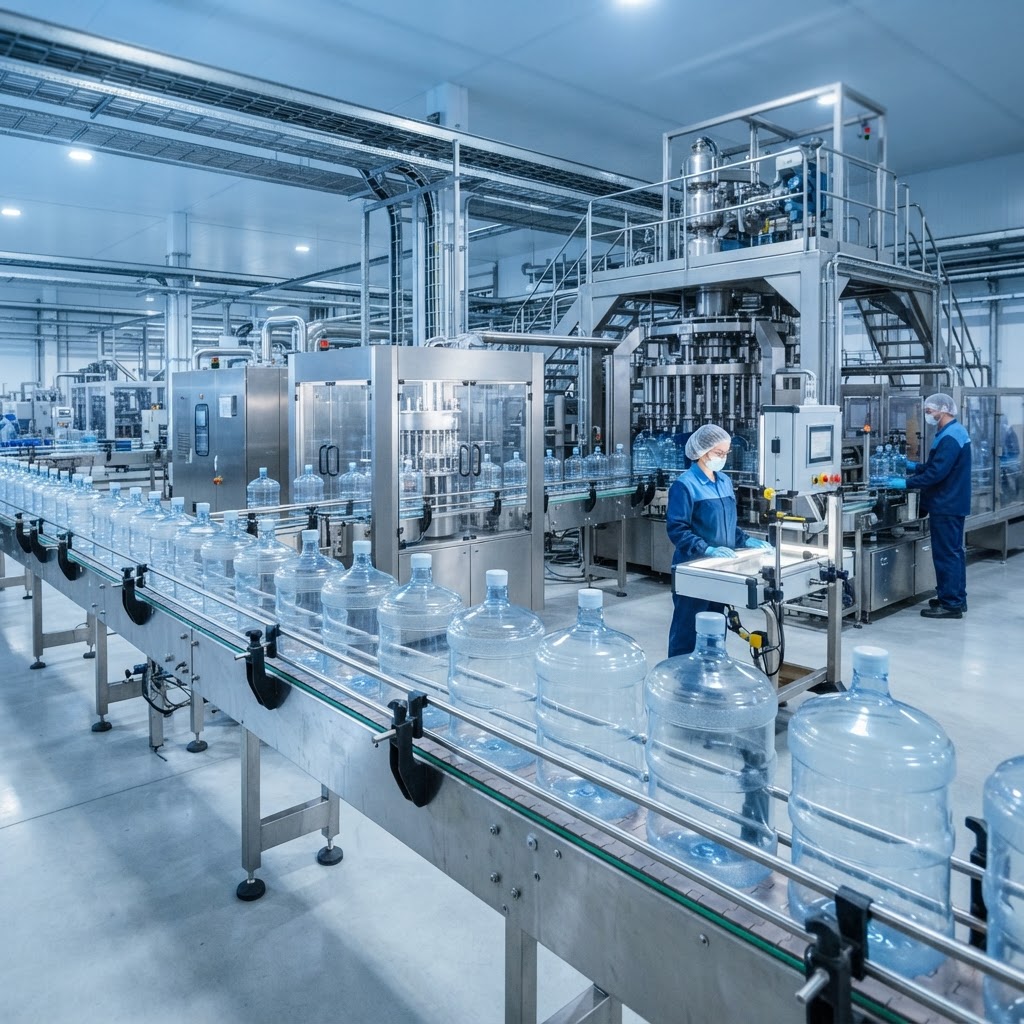
Manufacturing an 18.9L polycarbonate water bottle involves a sequence of stages, each of which influences the finished product:
- Material selection — choosing suitable-quality polycarbonate for clear, durable bottles.
- Material preparation — preparing the raw material for the moulding process.
- Moulding — forming the polycarbonate into the 18.9L bottle shape.
- Bottle forming — achieving the final geometry, walls, neck and base.
- Finishing — removing any process material and preparing the bottle for use.
- Quality inspection — checking each bottle against acceptance criteria.
- Packaging — protecting finished bottles for transport and storage.
Selecting the Polycarbonate Material
Suitable-quality polycarbonate is important when manufacturing clear, durable bottles intended for water applications. The material has to deliver the clarity, strength and impact resistance expected of a reusable 18.9L bottle, and it has to be suitable for contact with drinking water. For bottles used in bottled-water businesses, food-grade polycarbonate is specified to meet the requirements of food-contact applications. The quality of the raw material sets the ceiling for the quality of the finished bottle, so material selection is the foundation of the whole process.
Preparing the Material
Before the polycarbonate enters the moulding process, the raw material is prepared so that it will mould consistently. In general terms, this involves handling the material so that it is in the correct condition for moulding — clean, dry and free of contamination — so that the finished bottle has the clarity and structural integrity expected of a reusable container. The exact preparation depends on the material and the equipment in use, but the objective is always the same: a consistent material state going into moulding, so that the bottles coming out are consistent too.
Moulding the Bottle
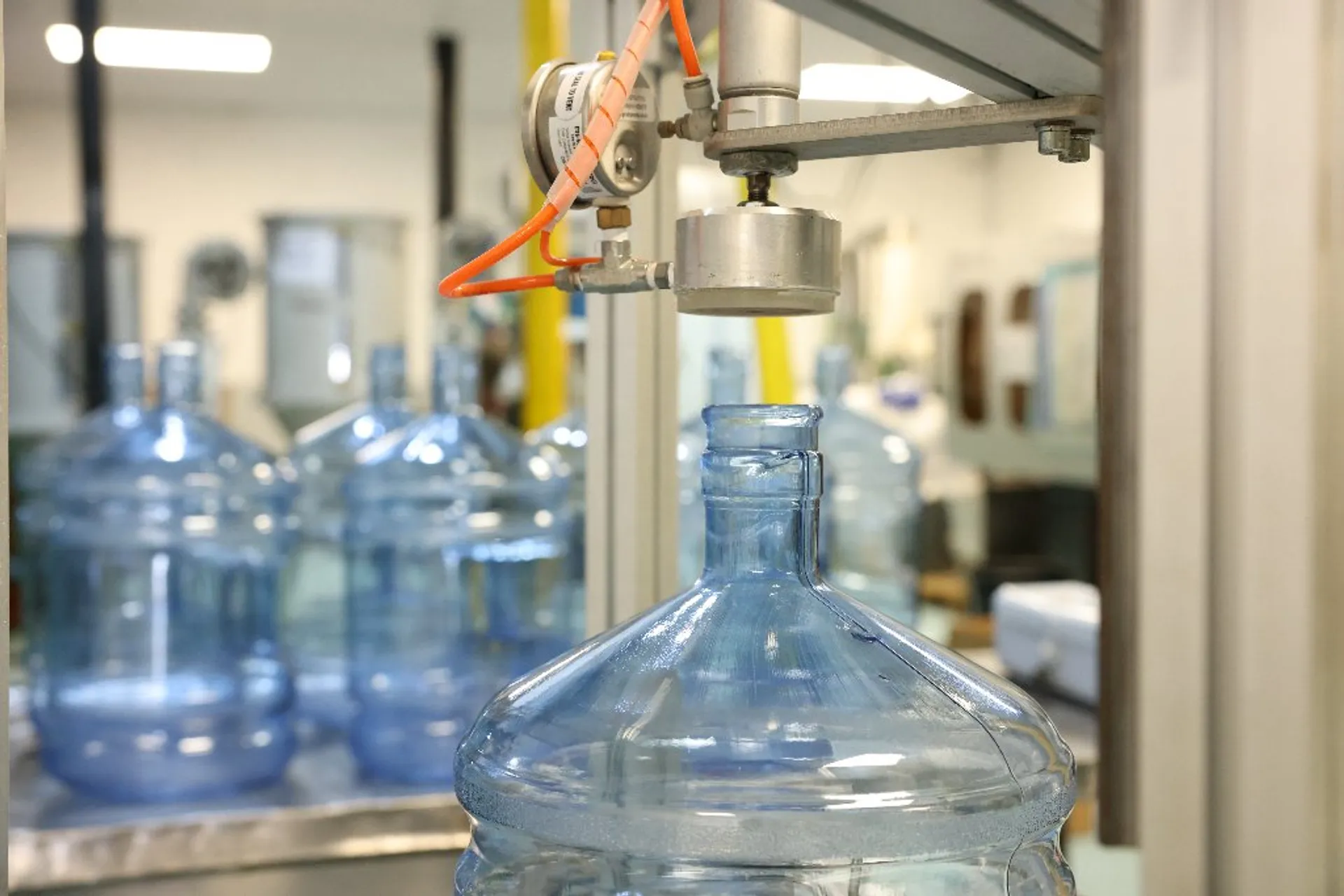
The moulding process forms the prepared polycarbonate into the required 18.9L bottle shape. A mould defines the bottle geometry — the body, shoulder, neck and base — and the process forms the walls of the bottle against that mould. The neck area is formed to a precise finish so that it will accept the intended closure, and the base is formed to allow the bottle to stand stably. Where the bottle includes a handle, the handle configuration is formed as part of the same moulding, producing an integrated, single-piece container. Because every bottle comes from the same mould and process, consistency between bottles is a direct result of how well the moulding is controlled.
Creating the Final Bottle Shape
Mould design and the manufacturing process together determine the bottle's final shape, appearance and consistency. A well-designed mould produces a bottle with uniform wall formation, a clean neck finish and a stable base, and a controlled process reproduces that result bottle after bottle. Consistency matters because 18.9L bottles are used in filling lines, delivery fleets and dispensers where variation causes problems: bottles must fill reliably, handle predictably, stack and transport safely, sit correctly on water dispensers, and seal properly with their closures. Closure compatibility in particular depends on a consistent neck finish, so shape consistency is not just cosmetic — it is functional.
Finishing and Inspection
After forming, finished bottles are checked before they are released. Inspection focuses on the factors that affect appearance and function in service:
- Clarity — the bottle should be clear and free of cloudiness or discolouration.
- Surface appearance — the surface should be smooth and free of defects.
- Shape consistency — each bottle should match the intended geometry.
- Neck and closure area — the neck finish should be clean and consistent so closures seal correctly.
- Visible defects — bottles are checked for cracks, inclusions or other visible faults.
- Overall product quality — the bottle should meet the acceptance standard for a reusable 18.9L container.
Quality Control in Bottle Manufacturing
Quality control is important for reusable 18.9L water bottles because the container is expected to perform reliably across many fill-wash-refill cycles. Consistent production, product inspection, manufacturing standards, quality management, product performance and reliable supply all depend on a controlled process that catches variation before bottles reach the customer. A bottle that passes inspection should fill, seal, stack and dispense as expected, batch after batch. Learn more about Fabocaps quality standards and how each bottle is inspected before dispatch.
Bottles With Handles and Without Handles
18.9L polycarbonate bottles can be produced in different configurations, including bottles with handles and bottles without handles. Both come from the same food-grade polycarbonate and the same controlled process; only the mould and the resulting external shape differ. The best configuration depends on the intended handling and application — manual delivery versus machine handling, for example. For a detailed comparison, read our article on the 5 Gallon Water Bottle With Handle vs Without Handle.
From Manufacturing to Customer
Inspection, handling and packaging are the final step between manufacturing and the customer. Finished bottles are inspected, then packed and handled so that they arrive clean, undamaged and ready for service. How bottles are packed affects how they transport and how easily they can be loaded into filling lines or delivery vehicles. Protecting the bottle between the factory and the point of use preserves the clarity and surface quality that the manufacturing process worked to achieve.
Why Choose an Experienced Manufacturer?
Businesses purchasing 18.9L water bottles should consider the manufacturer behind the bottle, not just the bottle itself. Manufacturing capability, consistent production, material quality, quality control, product consistency, supply reliability and the ability to meet business requirements all determine whether a bottle performs in service and whether supply stays dependable as volumes grow. An experienced manufacturer controls the whole process — from material selection through to final inspection — so that every batch meets the same standard. Learn more about Fabocaps.
Fabocaps 18.9L Polycarbonate Water Bottles
Fabocaps manufactures 18.9L / 5 gallon food-grade polycarbonate water bottles and offers options with and without handles, produced for bottling lines, delivery fleets and dispenser networks. Explore our 18.9L polycarbonate water bottles, learn more about Fabocaps, review our quality standards, or Request a Quote for current pricing and lead times.
Frequently Asked Questions
What material are 18.9L water bottles made from?
Reusable 18.9L / 5 gallon water bottles are commonly made from polycarbonate, a clear, strong plastic chosen for its clarity and impact resistance. Fabocaps manufactures 18.9L bottles from food-grade polycarbonate.
How are polycarbonate water bottles manufactured?
The process covers material selection, material preparation, moulding the polycarbonate into the bottle shape, forming the final geometry, finishing, quality inspection and packaging. Each stage is controlled to produce consistent, durable bottles.
Why is manufacturing consistency important for 18.9L bottles?
Consistency matters because 18.9L bottles are used in filling lines, delivery fleets and dispensers where variation causes problems. A consistent neck finish ensures closure compatibility, and consistent shape ensures bottles fill, stack, transport and dispense reliably.
Are 18.9L bottles available with handles?
Yes. Fabocaps manufactures 18.9L polycarbonate water bottles with handles for operations where manual lifting and carrying are a priority.
Are 18.9L bottles available without handles?
Yes. Fabocaps also manufactures a non-handled 18.9L polycarbonate bottle for operations that prefer a smooth profile or use alternative handling methods.
Where can I buy 18.9L polycarbonate water bottles?
You can source 18.9L polycarbonate water bottles directly from Fabocaps, which manufactures food-grade 18.9L / 5 gallon bottles with and without handles for businesses across South Africa and Africa.
Conclusion
Manufacturing an 18.9L polycarbonate water bottle is a controlled journey from material selection and preparation, through moulding and forming, to inspection, packaging and final supply. Each stage shapes the clarity, consistency and durability of the finished bottle, which is why the manufacturer behind the bottle matters as much as the material itself. Looking for 18.9L 5 Gallon Water Bottles? Request a Quote and our team will help you specify the right configuration for your operation.
Looking for 18.9L 5 Gallon Water Bottles?
Fabocaps manufactures and supplies 18.9L polycarbonate water bottles for customers in South Africa and across Africa.