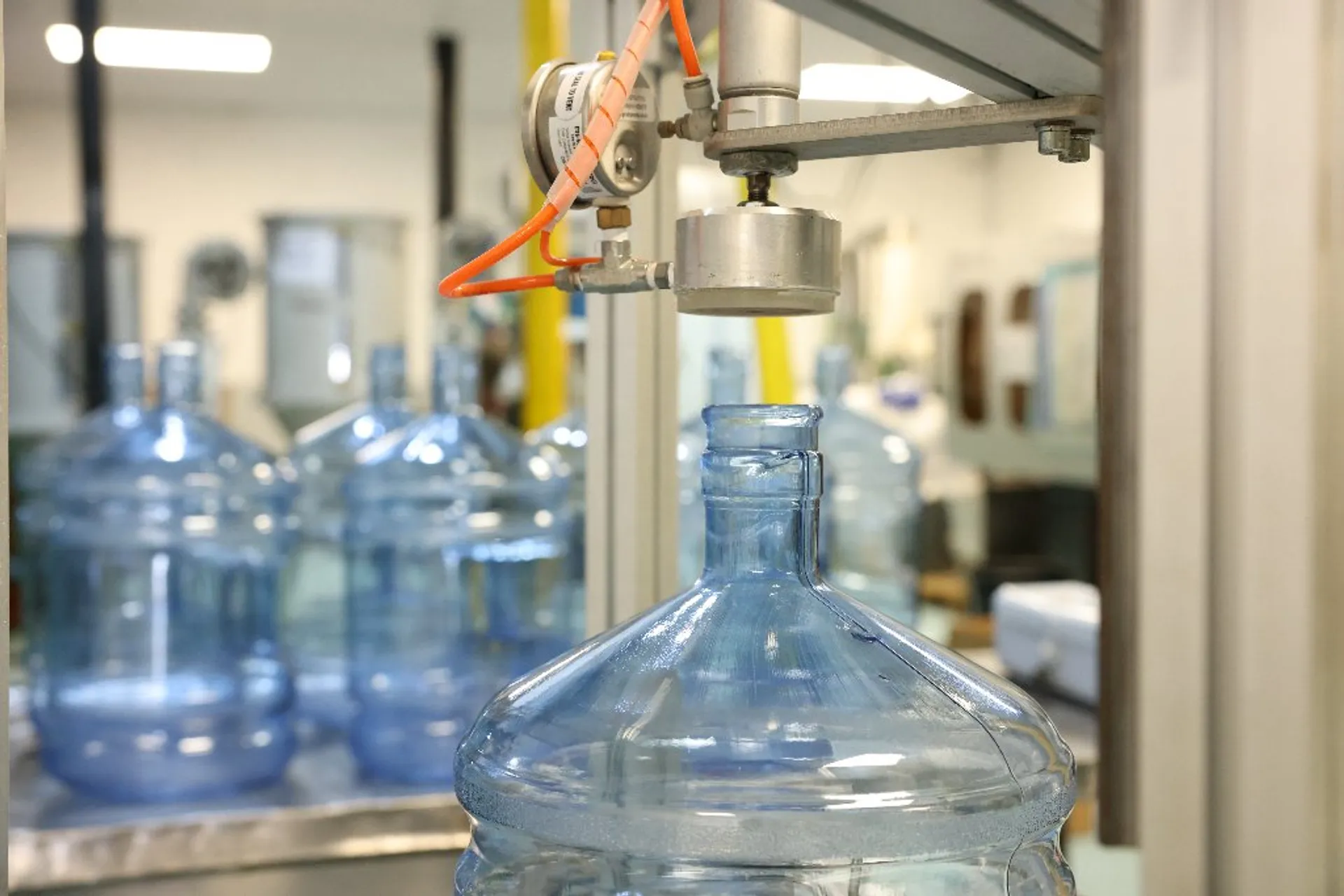
Water Bottles
Polycarbonate vs PET Water Bottles: Which Is Better?
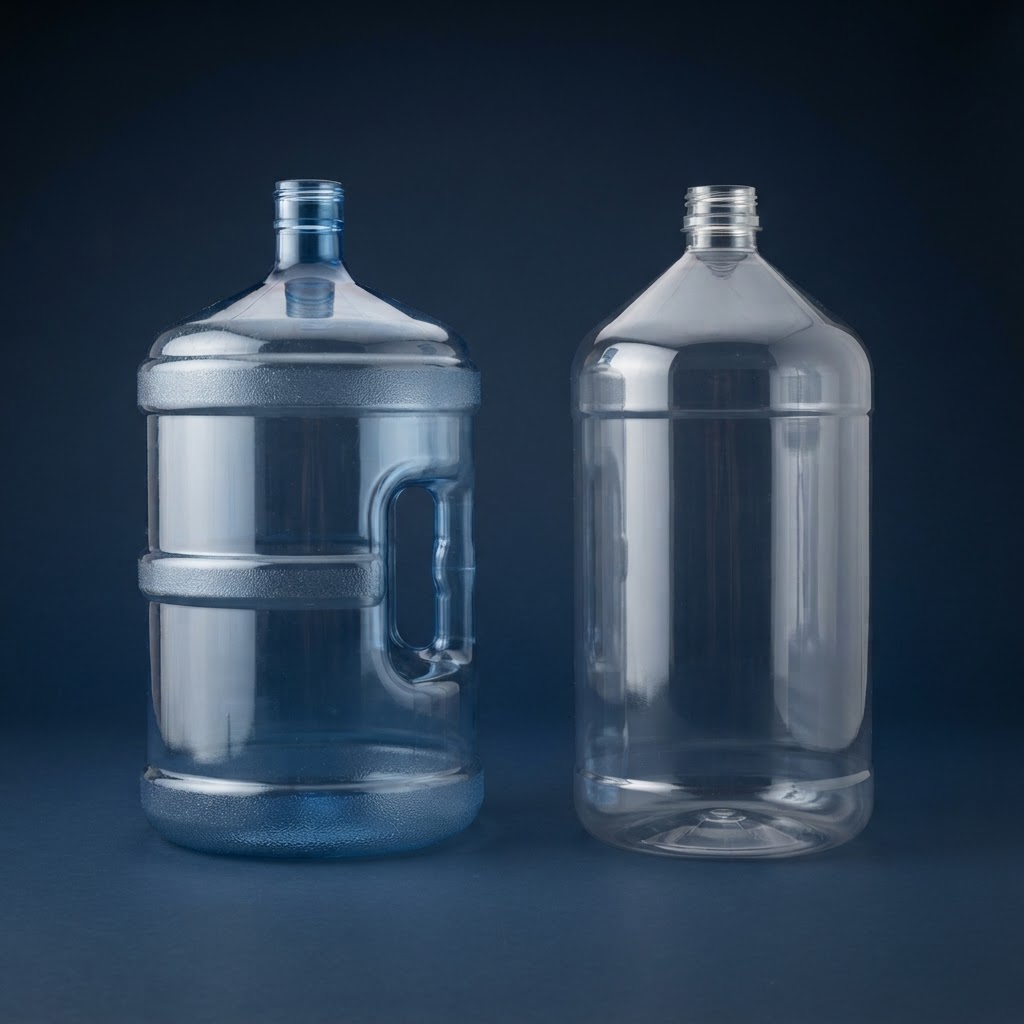
Polycarbonate (PC) and PET are two of the most commonly used plastics for water bottles and beverage packaging. Both are clear, both are widely available, and both have a long track record in the industry — but they have different characteristics that affect how a bottle performs in service. For businesses purchasing 5 gallon / 18.9L water bottles, the choice of material matters because it influences durability, weight, clarity, reusability, handling and overall cost over the life of the bottle. This article compares polycarbonate and PET so you can make an informed decision for your operation.
What Is Polycarbonate?
Polycarbonate (PC) is a clear, rigid thermoplastic known for its strength and impact resistance. It has a glass-like clarity that allows the contents of a bottle to be seen easily, and it is tough enough to withstand repeated handling without cracking or shattering under normal use. These properties are why polycarbonate is commonly considered for reusable, large-format water bottles such as 18.9L (5 gallon) dispenser bottles, where the container is filled, transported, emptied, washed and refilled many times. As with any material, the final performance of a polycarbonate bottle depends on material quality and manufacturing quality — raw material grade, wall thickness, neck precision and consistent moulding all affect how the bottle behaves in service.
What Is PET?
PET (polyethylene terephthalate) is a lightweight, clear plastic widely used in beverage packaging, including water bottles, soft-drink bottles and other drink containers. It has good clarity, is light to handle and transport, and has an established recycling infrastructure in many markets. PET is commonly associated with single-serve and smaller-format beverage bottles, but it is also used in some larger formats. Where its lightweight characteristics and established beverage-packaging properties are preferred, PET can be a suitable choice for the intended application.
Polycarbonate vs PET: Key Differences
The differences below are general characteristics of the two materials. How they translate to a specific bottle depends on the bottle design, wall thickness, manufacturing quality and intended use.
- Durability: polycarbonate is generally recognised for high impact resistance and a long service life under repeated handling; PET is lighter and more commonly used for shorter-life beverage packaging.
- Impact resistance: PC is tough and resists cracking under knocks; PET is more flexible and lighter but typically less impact-resistant in a comparable wall thickness.
- Clarity: both materials are clear, though the level of clarity and how it holds up over many wash cycles can differ.
- Weight: PET is lightweight, which can reduce transport cost per unit; PC bottles tend to be heavier because they are built for repeated reuse.
- Reusability: PC is commonly specified for bottles designed to be refilled many times; PET is more often used for shorter-life or single-use applications, though some PET formats are designed for reuse.
- Handling: a heavier, rigid PC bottle handles differently to a lighter, more flexible PET bottle, affecting lifting, stacking and loading.
- Transport: lighter PET can be cheaper to move in bulk; heavier PC is transported fewer times because it stays in circulation longer.
- Manufacturing: both are moulded, but PC and PET require different processing conditions and tooling.
- Cost considerations: PET often has a lower unit cost; PC has a higher upfront cost but is designed to be reused, spreading cost over many cycles.
- Suitability for 5 gallon / 18.9L applications: PC is widely used for reusable 18.9L dispenser bottles; PET is less common in this format but is used in other large-format beverage containers.
Durability and Impact Resistance
Durability matters for large reusable water bottles because the container is repeatedly handled, transported, filled and placed onto dispensers. A bottle that cracks or crazes early in its service life costs the business money and can interrupt operations. Polycarbonate is generally known for high impact resistance, which is why it is a common choice for 18.9L bottles that are filled, washed and refilled many times. PET is lightweight and widely used for beverage packaging, where its properties suit the intended, typically shorter, service life of those containers.
Clarity and Appearance
Both polycarbonate and PET are clear materials, and both can present water contents attractively. Clarity and consistent appearance can be important for water businesses and customers because a clear, clean-looking bottle reinforces the perception of a quality product. How well clarity holds up over repeated washing and refilling depends on the material, wall thickness and manufacturing quality, which is why a well-made bottle of either material tends to retain its appearance longer than a poorly made one.
Weight and Handling
PET is lighter than polycarbonate, which can reduce the effort of lifting a full container and the cost of transporting empty bottles in bulk. Polycarbonate bottles are heavier because they are built to be reused, and that extra weight is felt when lifting, carrying and loading full bottles. Businesses should consider how bottles are transported, how they are lifted, how delivery staff handle them and how customers move them — a lighter bottle is not always the right choice if the bottle is expected to survive many refill cycles.
Reusability and Intended Application
Whether a bottle is suitable for repeated reuse depends on the bottle design, material specification, manufacturing quality and intended application. Polycarbonate is commonly specified for reusable 18.9L dispenser bottles precisely because its strength and impact resistance suit repeated handling, washing and refilling. PET can also be used in reusable formats, but its typical application is shorter-life beverage packaging. The intended reuse pattern — how many fill-wash cycles a bottle is expected to complete and how it is handled between them — should drive the material decision rather than a generic assumption about either plastic.
Which Is Better for a 5 Gallon / 18.9L Water Bottle?
There is no single material that is best for every application. Polycarbonate can be an attractive choice for reusable 18.9L dispenser bottles where durability, clarity and repeated handling are important, and where the higher upfront cost is justified by a long service life over many refill cycles. PET can be appropriate for applications where its lightweight characteristics and established beverage-packaging properties are preferred, and where the intended service life is shorter. The final choice should depend on the intended use, bottle design, reuse requirements, handling process and manufacturer quality — not on the assumption that one material is universally better than the other.
Why Manufacturing Quality Matters
The material alone does not determine bottle quality. A well-made PET bottle can outperform a poorly made polycarbonate one, and vice versa. What matters in practice is raw material quality, consistent manufacturing, bottle design, neck and closure precision, appearance, quality control and how well the bottle matches its intended application. Consistent wall thickness, accurate neck finish and controlled moulding all affect how a bottle fills, seals, stacks and survives in service. Learn more about Fabocaps quality standards and how each bottle is inspected before dispatch.
Fabocaps 18.9L Polycarbonate Water Bottles
Fabocaps manufactures 18.9L / 5 gallon food-grade polycarbonate water bottles and offers bottle options with and without handles, designed for bottling lines, delivery fleets and dispenser networks. Explore our 18.9L polycarbonate water bottles, learn more about Fabocaps, or Request a Quote for current pricing and lead times. You can also review compatible non-spill closures for your 5 gallon bottles.
Frequently Asked Questions
Is polycarbonate better than PET for 5 gallon water bottles?
Not universally. Polycarbonate is commonly chosen for reusable 18.9L dispenser bottles because of its durability and impact resistance, while PET can suit applications where a lightweight, shorter-life container is preferred. The better material depends on the intended use.
Are PET and polycarbonate the same material?
No. PET (polyethylene terephthalate) and polycarbonate (PC) are different plastics with different properties. Both are clear, but they differ in strength, weight, reusability and typical applications.
Which is more durable, PET or polycarbonate?
Polycarbonate is generally recognised for higher impact resistance and a longer service life under repeated handling, which is why it is a common choice for reusable 18.9L bottles. PET is lighter and widely used for beverage packaging with a typically shorter service life.
Are polycarbonate bottles suitable for reuse?
Yes. Polycarbonate is commonly specified for reusable 18.9L dispenser bottles because its strength and impact resistance suit repeated filling, washing and refilling. How long any bottle lasts depends on its design, manufacturing quality and handling.
What size is a 5 gallon water bottle?
A 5 gallon water bottle holds approximately 18.9 litres. Five US gallons equals about 18.9L, which is why the two terms are used interchangeably for this large-format, reusable dispenser bottle.
Does Fabocaps manufacture 18.9L polycarbonate bottles?
Yes. Fabocaps manufactures 18.9L / 5 gallon food-grade polycarbonate water bottles and offers options with and without handles.
Conclusion
Polycarbonate and PET are both clear, useful plastics, but they differ in durability, impact resistance, weight, clarity over time, reusability and cost. Polycarbonate is commonly chosen for reusable 18.9L dispenser bottles where strength and a long service life matter, while PET suits lighter, shorter-life beverage packaging. Buyers should select the material based on the intended application, bottle design, reuse requirements and manufacturer quality rather than assuming one material is always better.
Looking for 18.9L 5 Gallon Water Bottles?
Fabocaps manufactures and supplies 18.9L polycarbonate water bottles for customers in South Africa and across Africa.