Materials & Quality
Are Polycarbonate Water Bottles Safe for Drinking Water?
Introduction
Polycarbonate is one of the most widely used materials for reusable drinking-water containers, including 18.9L / 5 gallon water bottles found in homes, offices and bottled-water operations around the world. But a common question remains: are polycarbonate water bottles safe for drinking water? The short answer is that appropriately manufactured food-contact polycarbonate containers can be used for drinking-water applications, but suitability depends on the specific material, the manufacturing process, the intended use and the applicable food-contact requirements in the target market. This article explains what polycarbonate is, why it is used for reusable water bottles, what BPA means in this context, and what buyers should look for when choosing an 18.9L polycarbonate water bottle.
What Is Polycarbonate?
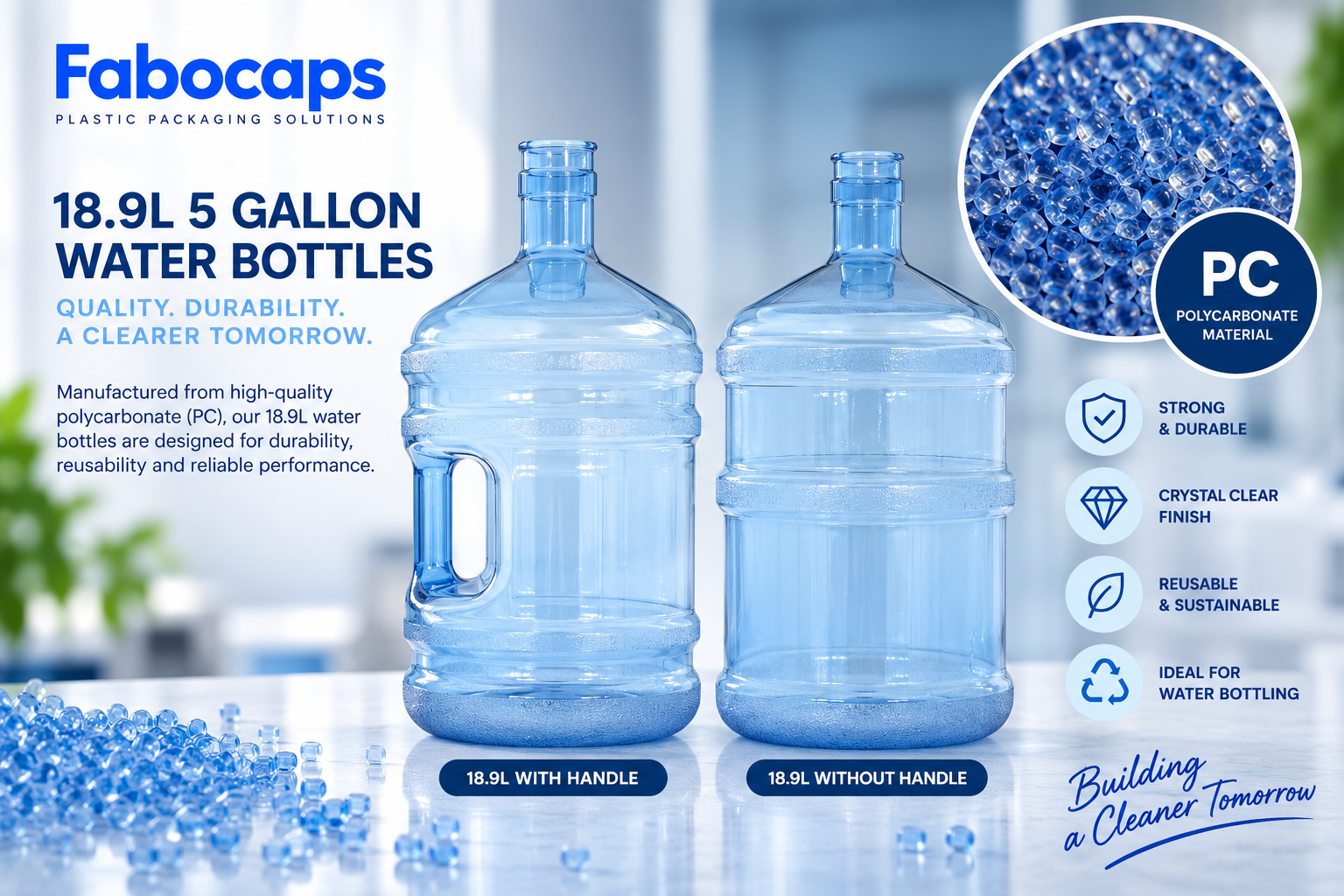
Polycarbonate (PC) is a strong, clear engineering plastic commonly used for reusable beverage and water containers. It is a thermoplastic polymer, meaning it can be moulded into complex shapes when heated and holds its form once cooled. This makes it well suited to manufacturing large-format bottles such as the 18.9L / 5 gallon water bottle.
Some of the characteristics that make polycarbonate useful for reusable water bottles include:
- Clarity — polycarbonate is naturally transparent, allowing the contents of the bottle to be seen.
- Strength — it is a rigid, durable plastic that resists breaking under normal handling.
- Impact resistance — polycarbonate can withstand impacts better than many other clear plastics, which matters for a large, heavy bottle that is repeatedly transported, handled and refilled.
- Suitability for reusable container applications — its combination of properties makes it suitable for bottles designed to be reused many times.
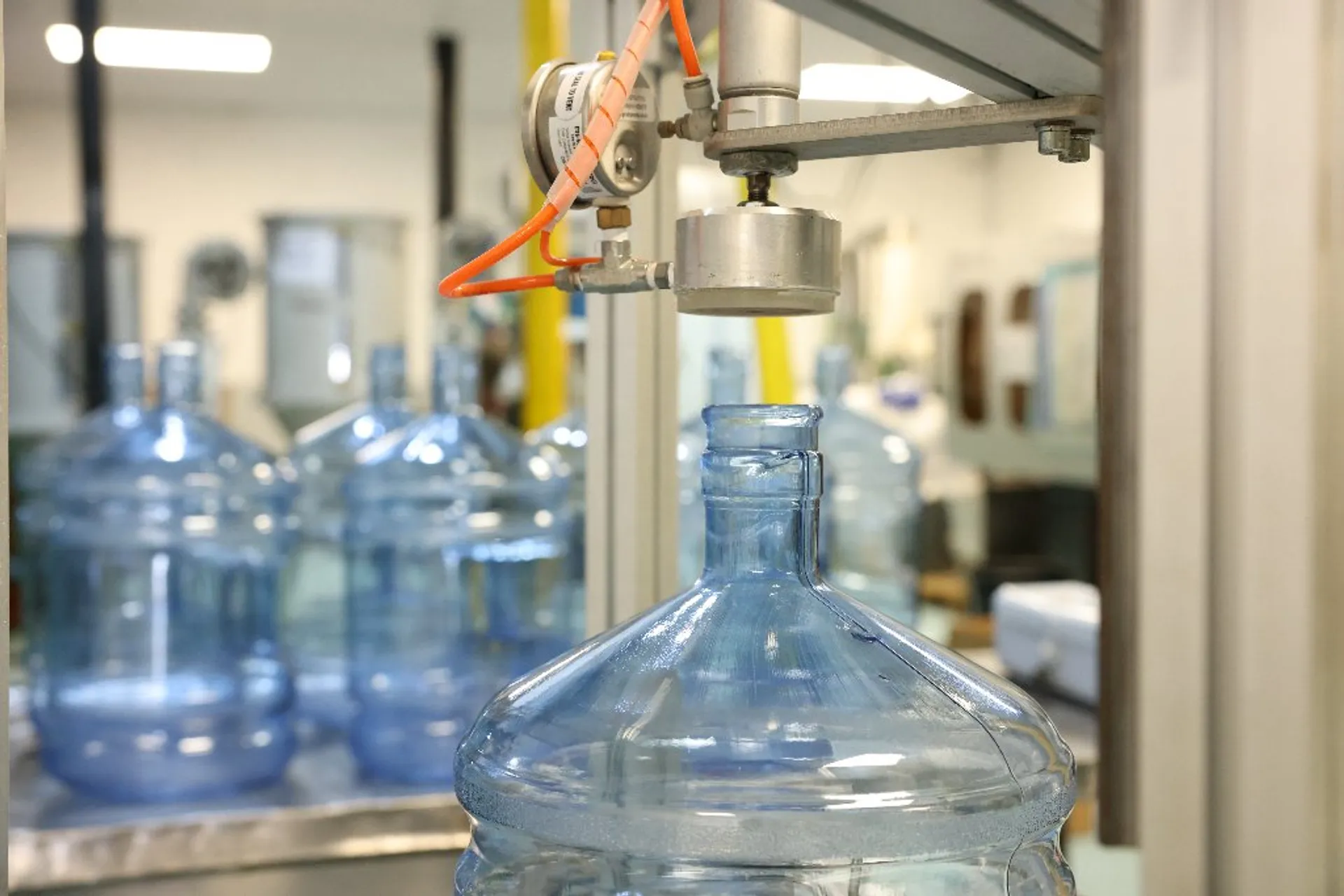
- Ability to be manufactured into large-format water bottles — polycarbonate can be moulded into the 18.9L / 5 gallon bottle format used by water delivery and bottling operations.
These properties explain why polycarbonate is widely used for reusable drinking-water containers. However, the material is only one part of the picture. How the bottle is manufactured, what it is intended for and how it is maintained also matter.
Why Polycarbonate Is Used for Reusable Water Bottles
Reusable water bottles need to survive repeated handling, transport, washing and refilling over an extended service life. Polycarbonate is used for reusable water bottles because it offers a practical balance of clarity, strength and impact resistance. A bottle that cracks or shatters easily is not practical for a water delivery business, and a bottle that cannot be cleaned properly is not suitable for repeated reuse. Polycarbonate addresses both concerns: it is tough enough for daily commercial use and can be manufactured to a consistent standard that supports proper cleaning and inspection.
For bottled water businesses and water delivery operators, a reusable 18.9L polycarbonate water bottle can be refilled many times before it needs to be retired, which makes it a practical container for large-format water distribution.
What Is BPA and Why Does It Matter?
BPA (bisphenol A) is a chemical used in the manufacture of certain polycarbonate plastics and other materials. It has been the subject of significant public and regulatory attention, which is why it often comes up in discussions about polycarbonate water bottle safety.
It is important to be precise here. BPA is associated with the manufacture of certain polycarbonate plastics, but not every polycarbonate product necessarily has the same formulation or the same BPA status. Consumers should look at the manufacturer’s material and food-contact information rather than assuming safety solely from the word “polycarbonate.”
If a manufacturer makes a specific claim about BPA — for example, that a product is BPA-free — that claim should be supported by the manufacturer’s own product documentation. Buyers should ask the supplier for material and food-contact information specific to the product they are considering.
Are Polycarbonate Water Bottles Safe for Drinking Water?
The question of whether polycarbonate water bottles are safe for drinking water does not have a single universal answer. Appropriately manufactured food-contact polycarbonate containers can be used for drinking-water applications, but suitability depends on the specific material, the intended use and the applicable food-contact requirements. A bottle that is designed and manufactured for food-contact use, used as intended and maintained properly is a different proposition from a container that is not intended for food-contact use or that is used outside its intended conditions.
In practice, food-contact safety depends on several factors working together:
- The material — the specific plastic and its formulation.
- The manufacturing process — how consistently the bottle is produced.
- The intended use — whether the bottle is designed for drinking-water / food-contact applications.
- The applicable food-contact requirements — the regulatory requirements that apply in the target market.
- How the bottle is used and maintained — cleaning, sanitation, handling and inspection.
This is why this article does not state that “polycarbonate bottles are 100% safe” or that “BPA is completely harmless.” Food-contact safety is assessed based on the specific material and use, not on a blanket statement about a material category.
Food-Contact Compliance and Material Quality
Food-contact materials are subject to regulatory requirements in different markets. These requirements set out how materials intended for contact with food or drinking water should be assessed and used. Requirements differ between markets, and manufacturers should ensure their products meet the requirements applicable to their intended market.
In the United States, the Food and Drug Administration (FDA) provides food-contact information for materials used in food containers and packaging. The FDA states that its current assessment supports the safety of approved BPA uses in food containers and packaging. This is a statement about approved uses of BPA in food-contact materials as assessed by the FDA — it is not a statement that every polycarbonate bottle is automatically safe regardless of its material, manufacturing or intended use.
The key point is that food-contact safety is assessed based on the specific material and use and the applicable requirements, not on a broad assumption about a material category. Where appropriate, buyers should ask about food-contact compliance rather than assuming universal certification.
BPA-Free vs Food-Grade Polycarbonate
The terms “BPA-free” and “food-grade” are often used in discussions about plastic bottles, but they describe different aspects of a product and should not automatically be treated as interchangeable terms.
- BPA-free refers to a claim about the BPA status of the material — specifically, that the product does not contain BPA. This is a material-composition claim.
- Food-grade refers to whether a material is suitable for food-contact use. This is about suitability for the intended application and applicable food-contact requirements.
A product may be described as BPA-free, as food-grade, as both, or as neither — these are separate characteristics. Buyers should look at the manufacturer’s product documentation for both aspects rather than assuming that one implies the other.
What Makes a Polycarbonate Water Bottle Suitable for Reuse?
For a polycarbonate water bottle to be suitable for reuse, several factors need to be considered together:
- Material — the bottle should be made from a material suitable for the intended food-contact application.
- Manufacturing consistency — the bottle should be manufactured consistently, so that each bottle performs as expected.
- Neck compatibility — the neck should be compatible with the intended closure or cap system.
- Design for handling and reuse — the bottle should be designed for the intended handling and reuse environment.
- Cleanability — the bottle should be capable of being properly cleaned and maintained.
- Product documentation — the supplier should provide appropriate product and quality information.
No single factor determines whether a bottle is suitable for reuse. The combination of material, manufacturing, design, cleanability and documentation is what matters.
Cleaning and Maintenance Matter
Bottle safety is not only about the plastic material. Proper cleaning, sanitation, handling, storage and inspection are also important for reusable drinking-water containers. A bottle made from appropriate material can still become unsuitable for use if it is not cleaned and maintained properly.
For detailed guidance on cleaning, sanitising and maintaining an 18.9L polycarbonate water bottle, read our article on How to Clean and Maintain an 18.9L Polycarbonate Water Bottle.
Signs a Bottle Should Be Removed From Service
Even with proper maintenance, a reusable bottle will not last forever. Replacement depends on the bottle’s condition and the manufacturer’s guidance. The following signs should prompt assessment of whether a bottle should be removed from service:
- Visible cracks — in the body, base, shoulder or neck of the bottle.
- Excessive scratching — deep or widespread scratches that could affect the bottle’s appearance or cleanability.
- Deformation — changes in shape, bulging or distortion.
- Discolouration or cloudiness — that does not resolve with cleaning.
- Damage to the neck or closure area — a neck that no longer accepts closures properly.
- Any other visible deterioration that makes the bottle unsuitable for its intended use.
There is no fixed number of refill cycles or years of service that applies universally. How long a bottle lasts depends on how it is used, cleaned and handled. Bottles showing any of the signs above should be assessed according to the business’s quality-control procedures and removed from circulation if unsuitable for continued use.
How to Choose a Quality 18.9L Polycarbonate Water Bottle
For bottled water companies, water delivery businesses and commercial users, choosing the right 18.9L polycarbonate water bottle means looking beyond the material name. Before choosing an 18.9L polycarbonate water bottle, ask the supplier:
- What material is used?
- Is the bottle intended for drinking-water / food-contact use?
- What quality-control processes are used?
- Is the bottle manufactured consistently?
- What closure/cap system is compatible?
- What handling and cleaning process is recommended?
- What product documentation is available?
- Is the supplier experienced in supplying reusable water bottles?
These questions help buyers assess whether a bottle is suitable for their operation and whether the supplier can provide the information and consistency needed for a commercial water business.
Why Manufacturing Quality Matters
Material is only part of bottle safety and performance. Manufacturing quality is equally important. A bottle made from appropriate material but manufactured inconsistently — with variations in wall thickness, neck dimensions or surface quality — may not perform as expected in service. Consistent manufacturing helps ensure that each bottle meets the same standard, which matters for cleaning, closure fit, durability and inspection.
Learn more about Fabocaps quality standards and how each bottle is inspected before dispatch. For an overview of the production process, read about how 18.9L polycarbonate water bottles are manufactured.
Frequently Asked Questions
Are polycarbonate water bottles safe for drinking water?
Appropriately manufactured food-contact polycarbonate containers can be used for drinking-water applications, but suitability depends on the specific material, intended use and applicable food-contact requirements. Safety should be assessed based on the manufacturer’s product documentation and the requirements of the target market, not on a blanket assumption about polycarbonate.
Does polycarbonate contain BPA?
BPA is associated with the manufacture of certain polycarbonate plastics, but BPA status should be confirmed from the specific manufacturer’s documentation. Not every polycarbonate product necessarily has the same formulation or BPA status.
Are BPA-free and food-grade the same thing?
No. BPA-free refers to a material-composition claim, while food-grade refers to suitability for food-contact use. These describe different aspects of a product and should not automatically be treated as interchangeable terms.
How should an 18.9L polycarbonate bottle be maintained?
Appropriate cleaning, sanitation, inspection and handling are all important for reusable polycarbonate bottles. For detailed guidance, read our article on How to Clean and Maintain an 18.9L Polycarbonate Water Bottle.
When should a reusable bottle be replaced?
Replacement depends on the bottle’s condition and the manufacturer’s guidance. Visible damage, cracks, excessive scratching, deformation or other signs of deterioration should be assessed appropriately. There is no fixed number of refill cycles or years of service that applies universally.
Conclusion
Are polycarbonate water bottles safe for drinking water? Appropriately manufactured food-contact polycarbonate containers can be used for drinking-water applications, but suitability depends on the specific material, the manufacturing process, the intended use and the applicable food-contact requirements — not on a blanket statement about the material category. For commercial water businesses, the important questions are what material the bottle is made from, whether it is intended for food/water contact, whether it is manufactured consistently and whether the supplier provides appropriate product and quality information. Proper cleaning, maintenance and inspection are also essential. Looking for quality 18.9L 5 Gallon Water Bottles? Request a Quote and our team will help you specify the right configuration for your operation.
Explore our 18.9L polycarbonate water bottles, review our Fabocaps quality standards, learn more about Fabocaps, or Request a Quote for current pricing and lead times.
Looking for 18.9L 5 Gallon Water Bottles?
Fabocaps manufactures and supplies 18.9L polycarbonate water bottles for customers in South Africa and across Africa.